Orlando is 60 miles inland, so the storm surge argument does not apply here. The wind does. A turf lawn is a light sheet of material held down by infill, friction and its perimeter, and an edge that was never pinned is the first thing a squall line finds.
The season, and what reaches Orange County
The Atlantic hurricane season runs June 1 to November 30 (https://www.weather.gov/mlb/). Inland counties are spared the surge and most of the flooding, and they take the wind, the tornadoes spun off the outer bands, and the rainfall that comes with a slow-moving system. The same months carry the ordinary thunderstorm season, which arrives most afternoons and tests the same details with less warning.
For a turf lawn the practical question is not whether the grass survives a named storm. It is whether the edges stay down in a 40 to 60 mph gust, because that is the wind most yards here will actually see, several times a season, before any hurricane arrives.
Where a lawn fails first
Three places. The perimeter, where the turf meets a wall, a bed or a fence and the edge is held only by a buried lip. The seams, where two pieces are glued and the adhesive was applied to wet or dirty backing. And the corner lift, where wind gets under a cut edge and peels the sheet back across the lawn.
Infill weight is the quiet variable. A lawn that was brushed with silica sand at the specified rate holds its blades and its position; a lawn where the crew under-filled to save a few bags of sand lifts at the corners and never sits flat again.
The anchoring detail that matters
Ask for the edge restraint and the pinning schedule before the work starts. A correct build sets an aluminium or composite edge restraint along open runs, pins the perimeter at a published spacing, and uses a wind-rated seam adhesive on clean, dry backing. On a large open lawn, an exposed corner or a lot with no windbreak, the specification should say so.
The Florida standard for synthetic turf, Rule 62-308.100 under Statute 125.572, sets minimum requirements for material, permeability, stormwater and proximity to trees, but it is a compliance floor, not an anchoring specification. The anchoring is between the homeowner and the installer, so it belongs in the contract in writing (https://floridadep.gov/sites/default/files/SyntheticTurfFAQ%20final.pdf).
After the storm
Walk the perimeter first. A lifted edge shows as a soft corner that springs back when stepped on. Check the seams by hand: a seam that has opened will feel like a lip rather than a line. Brush the pile back up after the debris is cleared, top up infill where it washed, and rinse the surface if a lot of leaf material sat on it through the storm.
One repair rule: never glue a lifted edge back down without checking what is under it. If the base has moved, the glue fails again within a season.
Preparing the lawn in May
The cheapest hurricane preparation for a turf lawn happens in May, before the season opens. Clear the roof and the gutters so rain lands where the grade expects it. Cut back the limbs that hang over the surface, because a limb through the lawn tears the base as well as the grass. Check that the perimeter still sits down, especially along a fence line where wind funnels.
Then check the drainage path. A lawn that drained perfectly in February can pond in September because the swale behind it silted up or a neighbour's new fence changed the flow. Walk the low corner after the first heavy storm of the season and see where the water went. If it did not go anywhere, fix the outlet before the second storm rather than after the third.
One more item belongs on the May list: the Florida one-call notice. Any work around the perimeter that involves digging, including a new edging run or a drainage repair, needs a Sunshine 811 notice two full business days ahead, and the locate is free (https://sunshine811.com/when-can-i-dig).
Frequently asked questions
Can a hurricane blow artificial grass away?
An entire lawn, no. Corners and cut edges lift when wind gets under them, and an unpinned perimeter peels back. Inland Orlando rarely sees that at hurricane strength, but a summer squall can lift a badly finished edge.
Is artificial grass covered by homeowners insurance?
It is usually part of the landscaping on the policy, and landscaping cover is lower than dwelling cover. Read the landscaping line rather than assuming the turf is covered like the roof.
Should I cut trees back over the lawn before the season?
Yes. A limb through a lawn tears the base under it, and that repair costs more than the trim. Do the work in April, before the season starts.
Sources
- National Weather Service Melbourne - Central Florida
- Florida DEP - Minimum Standards for the Installation of Synthetic Turf, Rule 62-308.100
- Florida Statute 125.572 - regulation of synthetic turf (2025)
- Sunshine 811 - when can I dig
Related
Artificial Grass services in Orlando
Orlando Artificial Grass Residential Grass
A residential artificial grass installation in Orlando is a drainage and sub-base project that happens to end with grass on top. The lawn is the last two days of the job; the base is everything else.

Orlando Artificial Grass Pet Grass
A pet yard is a plumbing problem with grass on top. Two dogs in a Orlando wet season produce far more urine than a thin base can carry away, and the smell people blame on the grass is ammonia from a base that holds water.
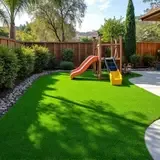
Orlando Artificial Grass Playground Grass
A playground surface is specified by what happens when a child falls on it. The grass is the top layer of a safety system, and the layer under it, the shock pad, is the part a cheap quote leaves out.
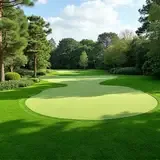
Orlando Artificial Grass Putting Greens
A putting green is the most precisely built surface in this trade. The ball tells the truth about the base, and a green laid over an uneven pad will not roll true no matter what the turf costs.
Orlando Artificial Grass Commercial Grass
Commercial work is judged on documents as much as on the surface. A property manager needs a specification, a drainage plan, a wind detail and a warranty schedule that survives an insurance review, not a square-foot price.
Areas we serve
Orlando
Artificial Grass in Orlando, FL - costs, water and soil notes.
Winter Park
Artificial Grass in Winter Park, FL - costs, water and soil notes.
Windermere
Artificial Grass in Windermere, FL - costs, water and soil notes.
Lake Nona
Artificial Grass in Lake Nona, FL - costs, water and soil notes.
Dr. Phillips
Artificial Grass in Dr. Phillips, FL - costs, water and soil notes.
Altamonte Springs
Artificial Grass in Altamonte Springs, FL - costs, water and soil notes.
Kissimmee
Artificial Grass in Kissimmee, FL - costs, water and soil notes.