A dog area is the single most common reason an Orlando homeowner calls about artificial grass, and odour is the single most common reason someone regrets it. The cause is not the grass. It is what sits under it, and how fast the water leaves.
Why humidity makes it worse
Urine is mostly water with urea and salts in it. On a draining build it passes through the backing and into the base, where bacteria convert the urea to ammonia. In a dry climate that process runs its course and the ammonia volatilises. In Orlando, the wet season keeps the surface and the infill damp for months, so the reaction keeps restarting and the smell never fully clears.
The other factor is heat. A surface at 140 to 160 degrees F in July accelerates the reaction, which is why the same lawn that is fine in January is unpleasant by August.
What a pet system changes
Four parts, and a quote should name all of them. A perforated backing that lets liquid through instead of trapping it. A deeper, open-graded base so the liquid has somewhere to travel. An infill that handles ammonia, usually zeolite or an antimicrobial product rather than plain silica sand. And edge drainage so the whole area has an outlet.
Pet-spec labour runs about $11.50 per square foot against $8.50 standard, and a fully built pet system on 500 square feet lands near $6,500 against $5,000 for a standard lawn. That premium is the base and the infill, not the grass.
The routine that keeps it livable
- Rinse weekly in the wet season, more often where two dogs use the same spot. Water dilutes the ammonia before bacteria convert it.
- Pick up solids daily. The smell comes from the liquid, but solids accelerate everything.
- Top up infill twice a year. Infill washes down and out; a thin infill exposes the backing where the urine collects.
- Brush the pile after heavy rain so the fibres stand and the surface dries.
An enzyme cleaner made for synthetic turf, applied to the spot rather than the whole lawn, breaks the cycle faster than water alone.
When to repair instead of clean
If the odour survives a rinse and a top-up, the problem is the base. A lawn where the stone under one corner has filled with fines and urine holds liquid, and no amount of cleaning fixes a saturated base. The repair is to lift the turf, remove and replace the affected stone, and add drainage at that spot.
The cheaper prevention is to build the pet area right the first time. On a 200 to 300 square foot dog run, the difference between a standard and a pet system is a few hundred dollars.
Designing the dog run
A dog area works better as its own small build than as a corner of a bigger lawn. Size it to the dogs: 200 to 300 square feet covers two medium dogs with room to run, and a smaller run concentrates use until one spot carries all the traffic.
Give it a slope of its own toward an outlet, and keep that slope away from the house and away from the neighbours. Use the pet base depth rather than the standard one, and make sure the infill is the ammonia-handling type rather than plain silica sand.
Think about shade before the grass goes down. A dog run in full afternoon sun is a hot surface and a fast ammonia reaction at the same time; a shade sail, a fence-line tree or the north side of the house changes both problems at once.
Finally, plan the cleaning access. A run that can be reached with a hose and a brush from one side will be rinsed weekly. One behind a locked gate behind a shed will be rinsed twice a year, and it will smell accordingly.
If the dogs also use the main lawn, treat that area the same way: a perforated backing, a deeper base and a rinse in the wet season. The failure mode in Orlando is always the same, and it is water that has nowhere to go.
Frequently asked questions
Does artificial grass smell with dogs?
Not on a proper pet system with a perforated backing, deep base and ammonia-handling infill. On a standard lawn with no outlet, it will, especially in the Orlando wet season.
Zeolite or silica sand for a dog area?
Zeolite handles ammonia better and costs more. Silica sand is fine as a general infill but it does nothing chemically for odour.
Will dog urine stain the turf?
It fades colour over years in high-use spots rather than staining immediately. The scent is the faster problem, and it is a drainage problem.
Sources
- Orlando Artificial Turf Pros - artificial turf cost in Orlando
- Site Pros Landscaping - artificial turf installation price guide
- National Weather Service Melbourne - Central Florida
- Florida DEP - Minimum Standards for the Installation of Synthetic Turf, Rule 62-308.100
Related
Artificial Grass services in Orlando
Orlando Artificial Grass Residential Grass
A residential artificial grass installation in Orlando is a drainage and sub-base project that happens to end with grass on top. The lawn is the last two days of the job; the base is everything else.

Orlando Artificial Grass Pet Grass
A pet yard is a plumbing problem with grass on top. Two dogs in a Orlando wet season produce far more urine than a thin base can carry away, and the smell people blame on the grass is ammonia from a base that holds water.
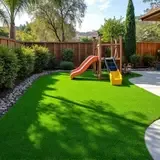
Orlando Artificial Grass Playground Grass
A playground surface is specified by what happens when a child falls on it. The grass is the top layer of a safety system, and the layer under it, the shock pad, is the part a cheap quote leaves out.
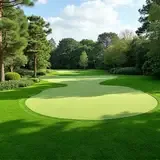
Orlando Artificial Grass Putting Greens
A putting green is the most precisely built surface in this trade. The ball tells the truth about the base, and a green laid over an uneven pad will not roll true no matter what the turf costs.
Orlando Artificial Grass Commercial Grass
Commercial work is judged on documents as much as on the surface. A property manager needs a specification, a drainage plan, a wind detail and a warranty schedule that survives an insurance review, not a square-foot price.
Areas we serve
Orlando
Artificial Grass in Orlando, FL - costs, water and soil notes.
Winter Park
Artificial Grass in Winter Park, FL - costs, water and soil notes.
Windermere
Artificial Grass in Windermere, FL - costs, water and soil notes.
Lake Nona
Artificial Grass in Lake Nona, FL - costs, water and soil notes.
Dr. Phillips
Artificial Grass in Dr. Phillips, FL - costs, water and soil notes.
Altamonte Springs
Artificial Grass in Altamonte Springs, FL - costs, water and soil notes.
Kissimmee
Artificial Grass in Kissimmee, FL - costs, water and soil notes.